
Grassroots vs Mine Sites
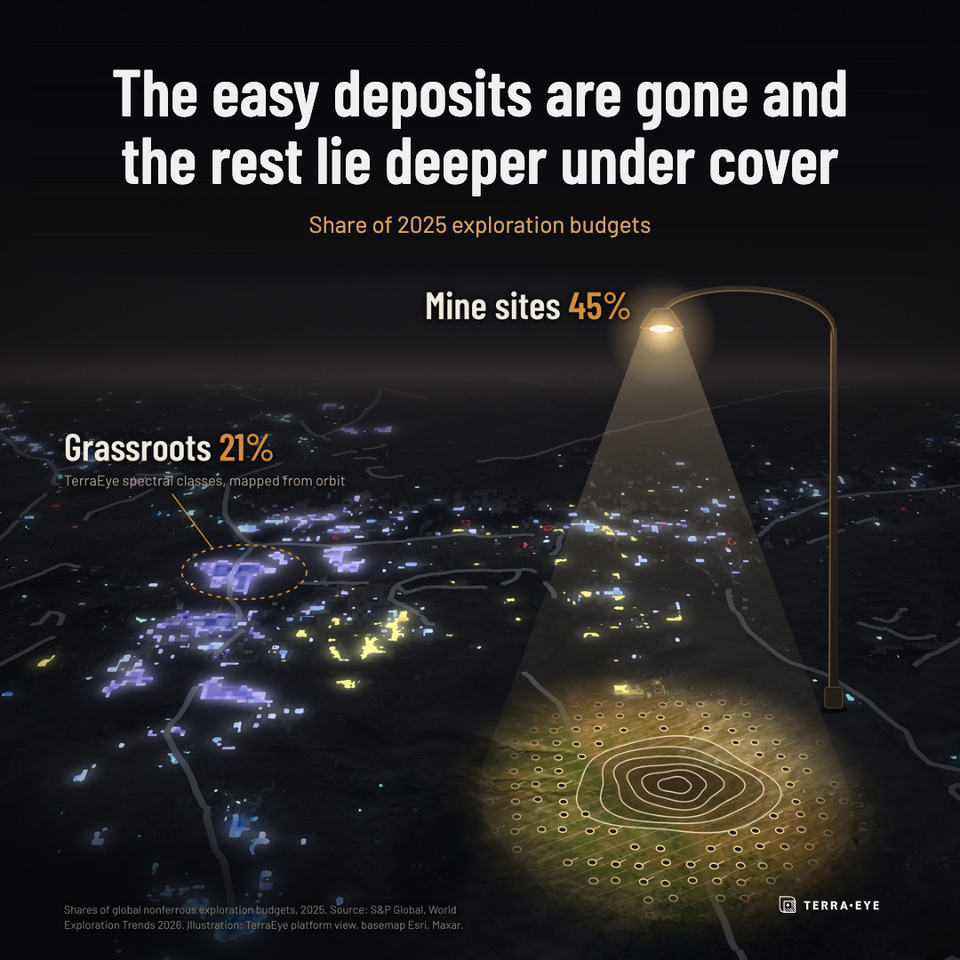
The easy deposits near the surface have already been found, and what's left is deeper and under cover.
That raises the cost of finding out whether a prospect deserves further work. Crews, surveys and drilling require capital while the geology is still poorly understood. A disappointing first campaign can consume money that might have tested the next idea.
The industry is concentrating its bets. In 2025, 45% of global nonferrous exploration budgets went to existing mine sites; just 21% went to grassroots exploration, according to S&P Global.
The risk is a self-reinforcing cycle. Ground with more data is easier to justify to a board. It receives another survey, another season and still more data. Underexplored ground struggles to attract the spending needed to demonstrate why it deserves spending. Geological potential can lose out to the reassurance of an existing evidence base.
TerraEye’s value goes beyond saving money on drilling. It combines satellite-derived surface evidence with available geology, geophysics and geochemistry to help geologists compare prospective areas before committing to fieldwork.
That can give unfamiliar ground a more credible claim on the budget. A company can start with a focused investigation, test the geological idea and decide whether to commit more. More of its capital remains available while the evidence develops, including money to pursue a different prospect if the first disappoints.
The return can therefore extend beyond an avoided expense. It can include exploration opportunities that would otherwise never have reached the field. Making the first informed decision more affordable expands the range of ground a company can realistically consider.